


Trade Routes of the Middle Ages: How commerce, culture, and agriculture intertwined along European trade routes

Updated: May 30
Beginning the Second Leg of the Journey: From Chili Peppers to the Global Spice Routes

Last summer, my fellowship journey began in South America, the birthplace of the chili pepper. I traveled through Peru and Bolivia studying the agricultural, cultural, and historical importance of chili peppers and other plants connected to food, medicine, and identity.
The Columbian Exchange and the Chili Pepper
The chili pepper began in the Americas, but it did not stay there.
After European contact, chili peppers moved rapidly through trade networks into Europe, Africa, Asia, and the Middle East. Over time, they became essential ingredients in cuisines far from their place of origin. Today, it is hard to imagine Indian, Thai, Chinese, Korean, Ethiopian, Hungarian, Spanish, or North African food without peppers, but that global story began in the Americas.
That is what makes this second journey important.
In the classroom, this gives students a powerful way to connect agriculture to world history. A pepper is not just a pepper. It is evidence of migration, trade, adaptation, colonization, and cultural creativity. It is a plant with a passport stamped by history.

That experience changed how I think about agriculture education. Chili peppers are not just crops. They are part of a much larger story about human movement, trade, colonization, adaptation, and cultural exchange. They connect ancient agriculture in the Americas to cuisines and traditions across the world.
When I returned to school, the chili pepper became more than a plant in our greenhouse. It became a doorway.
Students and I began studying pepper varieties, seed saving, plant traits, cultural origins, flavor, heat, food traditions, and the way one crop could travel across oceans and become part of hundreds of cuisines. The more we studied peppers, the more we realized we were really studying the movement of people, plants, knowledge, trade, and power.


During the 2025–2026 school year, thanks to grants we were awarded for tea gardens (FFA Living to Serve), therapy gardens (National Garden Bureau), world trade studies( Legacy), Vegetable Gardens (Whole Foods), Herb gardens (FFA Grants for Growing) and related projects, our curriculum grew beyond a chili-centered focus into a broader exploration of herbs, spices and agricultural trade in general. What started with peppers opened into a larger study of plants as medicine, flavor, trade goods, cultural symbols, dyes, teas, and agents of connection across time and place.
Instead of beginning with the origin of one plant, I am now following the broader routes that carried spices, herbs, foods, medicines, textiles, dyes, and ideas across continents. This second leg will focus on the history of global exchange through Europe, especially in places connected to spice trade, Islamic influence, maritime exploration, botanical study, and the Columbian Exchange, which brought chili, chocolate, potatoes, maize, tobacco, tomatoes, vanilla, pineapples, cassava, and more to Europe and then farther east.


From the Greenhouse to the Globe

This work has not stayed in a textbook. It has grown through our greenhouse, our garden beds, our bulletin boards, our plant tags, our seed trays, our student research, and our conversations.
Students helped build the foundation for this year’s herb and spice curriculum through projects that connected agriculture to real-world history and culture. We grew chili peppers, herbs, vegetables, tea plants, dye plants, and pollinator plants. We studied how plants are used for food, medicine, comfort, color, trade, and storytelling. Our student book this year is a collection of the herbs and spices we studied as well as a guide to over 20 activities we completed.

Our garden began to reflect the curriculum itself. The Tea & Herb Garden connects to wellness, culture, and hospitality. The Healthy Whole Food Veggie Garden helps students understand food production and nutrition. The Chili Pepper Garden connects us back to South America and the Columbian Exchange. The Dye Garden, filled with plants such as amaranth, celosia, sunflowers, cosmos, and calendula, connects agriculture to textiles, art, and chemistry. The Pollinator Garden reminds us that none of these plant stories happen without ecosystems. The Vertical Luffa Garden gives students a hands-on look at plant structures, fiber, natural products, and sustainability. The Sensory Garden and therapy garden work help students understand plants not only as crops, but as part of human well-being.
These projects helped students see that agriculture is not one narrow subject. It is science, history, culture, literature, health, ecology, trade, and design all tangled together like vines on a trellis.

Tea and Herb Garden


As our curriculum expanded, tea became one of the most natural bridges between agriculture, wellness, and world trade. A tea garden is simple enough for students to understand through growing and harvesting, but complex enough to open conversations about China, India, colonial trade, botanical transfer, hospitality, medicine, and daily ritual.
Our tea and herb projects also connect to horticultural therapy. Students can see how plants are used to calm, comfort, gather people, support wellness, and create meaningful experiences for others. This has helped us connect agriculture to service, especially through projects designed for teachers, elders, veterans, and community members.
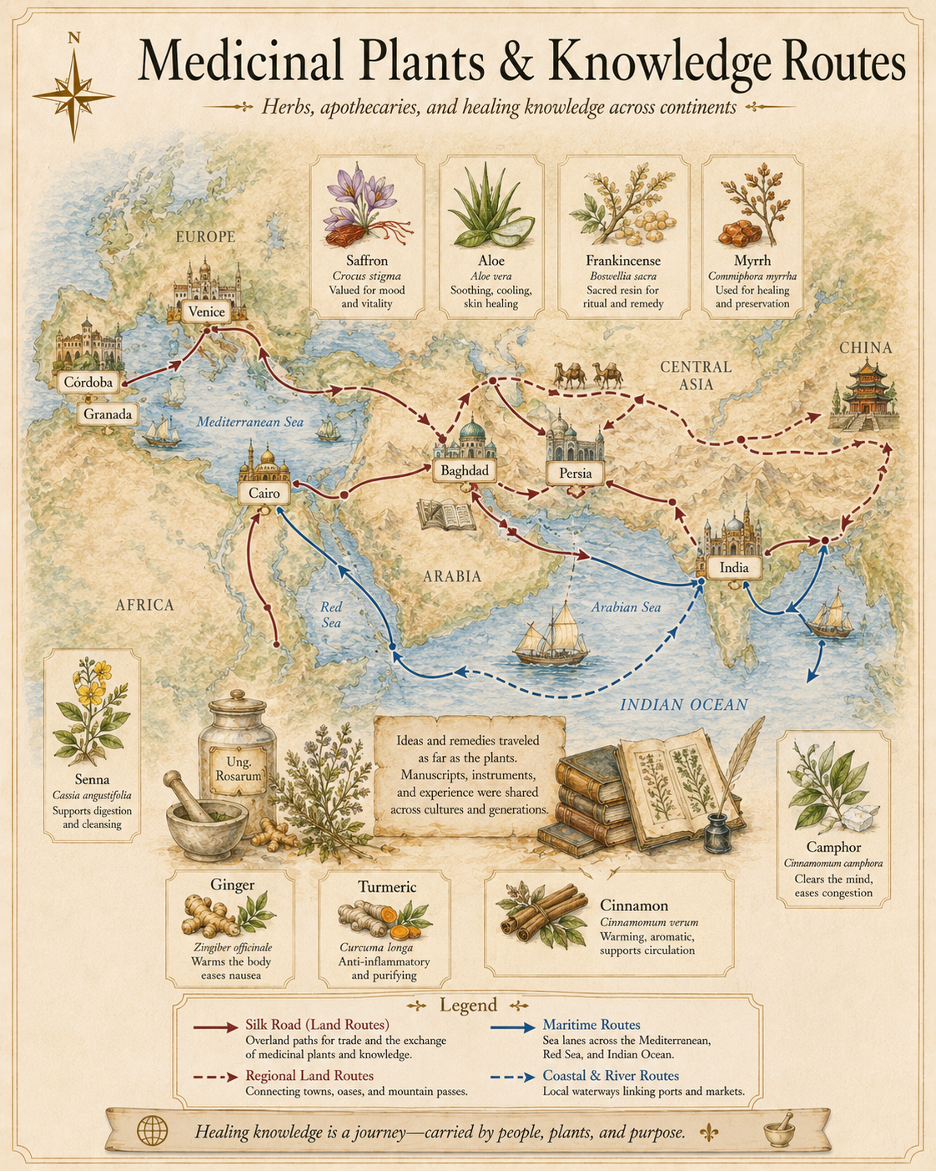
Medicinal plants gave us another layer. Through herbs, apothecaries, and healing traditions, students began to see how plant knowledge moved through trade routes along with spices and foods. Ginger, turmeric, aloe, saffron, frankincense, myrrh, cinnamon, and other plants were not just ingredients. They were part of medical systems, religious practices, household remedies, and cultural knowledge.
This connects directly to our classroom activities. Students can grow herbs, research their uses, compare traditional knowledge with modern science, study plant chemistry, and design products or educational materials for the community. They begin to understand that agriculture has always been connected to health.

The dye garden has become one of the most exciting ways to connect plants to history and creativity. Plants such as amaranth, celosia, sunflowers, cosmos, calendula, and other dye or pigment plants help students see that agriculture is not only about food. Plants have colored cloth, marked status, supported trade, and carried cultural meaning.
Through natural dye work, students can connect plant science to textiles, chemistry, art, and history. They can study fibers, mordants, pigments, and the movement of dye materials such as indigo, cochineal, saffron, madder, and other plant-based colors. This gives students a hands-on way to understand that trade routes carried beauty as well as flavor.


A Classroom Built Around Living Questions
The bulletin board became a visual anchor for our year: maps, dried herbs, spice blends, chili posters, student research, and the phrase “from garden to globe.”
One of the most meaningful parts of this work has been watching students build pieces of the curriculum with me. Our classroom and garden became research spaces. Students helped grow plants, identify plant uses, compare spice blends, create displays, study maps, and connect what we were growing to what people have traded for centuries.
The Herbs & Spices bulletin board became more than decoration. It became a map of our learning. It showed the students that the plants in our greenhouse were connected to oceans, ports, caravans, empires, kitchens, apothecaries, and gardens around the world.
Students could stand in front of that board and see dried herbs, chili peppers, spice blends, maps, and plant information all in one place. That matters. Agriculture becomes more powerful when students can see that the plants in front of them have traveled through history.
Mapping the Story

This summer’s journey builds on that classroom work.
My route will include Amsterdam, Paris, Barcelona, Granada, Córdoba, Seville, Palos de la Frontera, and Madrid. Each place helps tell a different part of the story of humanity’s search for spices and the connections, exchanges, and innovations that followed.
I do not want to ignore the sacrifices, exploitation, colonization, and human suffering that occurred as spices and plants were collected, traded, and dispersed around the world. Those truths are part of the story. However, this journey will focus on the movement of spices and the many ways people used plants to flavor food, support health, preserve traditions, create textiles and dyes, and connect cultures across continents.
Amsterdam connects to the Dutch East India Company and the European spice trade.
Paris offers botanical gardens, museums, markets, and the history of medicine and culinary arts.
Barcelona connects Mediterranean trade, markets, and food culture.
Granada and Córdoba provide a deeper look at al-Andalus, Islamic gardens, irrigation, medicine, architecture, and the movement of knowledge across cultures.
Seville and Palos de la Frontera connect directly to Atlantic exploration, Columbus, and the Columbian Exchange.
Madrid brings the journey together through Spain’s royal collections, global empire, markets, and museums, offering a final place to reflect on how spices, exploration, art, science, and power reshaped Europe and the wider world.
Together, these places help explain how plants and spices moved through history and how they changed agriculture, food, medicine, economics, textiles, trade, and culture.
My Reading List for the Journey
To prepare for this trip, I am reading books that connect spice history, food culture, agriculture, trade, and global exchange.
One of the central books on my list is Cumin, Camels, and Caravans: A Spice Odyssey by Gary Paul Nabhan. This book connects spices to trade routes, cultural history, and the movement of people and plants.
I am also reading The History and Natural History of Spices: The 5,000-Year Search for Flavour by Ian Anderson, which provides a long historical and botanical view of spices.
The Science of Spice by Dr. Stuart Farrimond helps explain flavor chemistry and how spices work in cooking. This is especially useful for connecting the trip to classroom lessons in plant science, chemistry, and culinary agriculture.
Culinary Herbs and Spices of the World by Ben-Erik van Wyk gives a broader reference for the plants themselves, including their origins, uses, and botanical traits.
I am also reading Tastes of Paradise: A Social History of Spices, Stimulants, and Intoxicants by Wolfgang Schivelbusch and Spice: The History of a Temptation by Jack Turner. Both books explore why spices were so valuable and how they shaped trade, status, medicine, and daily life.
Another important book is Spice: The 16th-Century Contest that Shaped the Modern World by Roger Crowley. This book focuses on the global competition for spices and the role of maritime exploration in shaping the modern world.
The Spice Ports: Mapping the Origins of Global Sea Trade by Nicholas Nugent will help me connect specific ports and trade routes to the places I will visit.
I am also reading The Nutmeg Trail by Eleanor Ford, which combines recipes, travel, and spice history.
For Granada and the Alhambra, I am reading Tales of the Alhambra by Washington Irving. This will help frame the visit to Granada through history, architecture, memory, and the cultural legacy of al-Andalus.
I am also including Niccolò Rising: The First Book of The House of Niccolò by Dorothy Dunnett because it brings medieval and Renaissance European trade to life through story. It follows a dyer’s apprentice into the world of trade, banking, politics, and merchant power. That connection to textiles, money, ambition, and global exchange fits beautifully with our dye garden and trade route studies.
International Trade in the Middle Ages by Hilary Green will help me connect wool, textiles, fairs, wine, and commercial networks to the classroom story of how agriculture, markets, and transportation built the modern economy.
Finally, Guns, Germs, and Steel: The Fates of Human Societies by Jared Diamond
This book explores why some societies developed political power, technology, agriculture, and global influence faster than others. Diamond argues that geography, access to domesticable plants and animals, disease exposure, and environmental conditions shaped the rise of civilizations more than individual superiority or intelligence. I am including it because it helps frame the larger questions behind this journey: how agriculture shaped human history, why some crops and animals moved more easily than others, and how food production, trade, disease, and conquest became connected. While the book has also been debated and critiqued, it offers a useful starting point for thinking about how plants, geography, and exchange helped shape the modern world.
Films, Podcasts, and Listening on the Road
In addition to reading, I am listening to podcasts and watching films that connect to chili peppers, spices, exploration, medicine, and trade.
Some useful podcast episodes include Eat My Globe episodes on chili peppers, hot sauce, spices, and the spice trade. These connect directly to last year’s South America chili pepper work and this year’s broader spice route curriculum.
BBC In Our Time episodes on Muslim Spain, the Columbian Exchange, maritime exploration, and related historical topics are helping me prepare for Granada, Córdoba, Seville, and Palos de la Frontera.
The Mariner’s Mirror Podcast episode on The Spice Ports connects directly to the book by Nicholas Nugent and to the maritime trade themes I will study in Amsterdam and Spain.
I am also listening to and reading about nutmeg, the Banda Islands, colonial trade, and the human cost of the spice trade. These resources help keep the story honest. Spices were beautiful, useful, fragrant, and valuable, but their movement was also tied to violence, empire, forced labor, and exploitation.
Films and documentaries also help provide context. 1492: Conquest of Paradise connects to Columbus and Atlantic exploration. The Physician connects to medieval medicine, herbs, learning, and cultural exchange. Rise of Empires: Ottoman helps frame the importance of Constantinople as a crossroads between Europe and Asia. Its fall marked a major shift in world history and helps explain why European powers increasingly searched for maritime routes to reach spices, medicines, textiles, and trade goods from the East. I am also looking for documentaries on the Dutch East India Company, the Silk Road, the Alhambra, the spice trade, and the Columbian Exchange.
Why This Matters for Teaching
This journey will become part of my agriculture curriculum.
Students often study agriculture as planting, growing, harvesting, and managing crops. Those skills are important, but agriculture is also connected to world history. Plants have shaped where people traveled, what they traded, what they ate, how they healed, what they wore, what they valued, and how cultures changed over time.
Through this fellowship, I want to create lessons that help students understand: where important herbs and spices originatedhow trade routes moved plants and agricultural knowledgehow chili peppers spread from the Americas to the rest of the worldhow spices influenced exploration, colonization, and global tradehow food reflects history and cultural exchangehow medicinal plants and apothecaries preserved botanical knowledgehow dye plants and textiles connect agriculture to art and commercehow botanical gardens, markets, and museums preserve agricultural history
This work will support future classroom projects connected to chili peppers, herbs, spices, medicinal plants, dye plants, food history, horticultural therapy, and global agriculture.
Last year, I studied the birthplace of the chili pepper. This year, I am following the routes that helped move plants, spices, foods, medicines, textiles, dyes, and ideas across the world.
Together, these journeys are helping me build a richer agriculture curriculum, one that connects the greenhouse to the globe and helps students see that agriculture has always been central to human history.


Comments