


Where Garden Paths Lead: Design, Nature, and Reflection at Callaway Gardens
- The Agricoutourist

- Mar 15
- 7 min read

Over the years, I have tried to visit gardens in nearly every place my travels take me. Long before I understood the planning required to design a beautiful landscape or the ecological value each plant contributes, I was drawn to the way gardens made me feel. Something about walking through a thoughtfully designed landscape slows the pace of the day, sharpens observation, and invites curiosity. That feeling is what first led me to seek out gardens wherever my travels took me.
My deeper appreciation for landscape design began during a summer course I took at University of Oxford titled English Country Houses and Gardens, which I attended with my mother the summer after I graduated from college. By that time, I had already walked through some of the most celebrated gardens in Europe. The formal terraces of Palace of Versailles Gardens revealed the power of symmetry and scale. The dramatic Renaissance fountains and terraced waterworks of Villa d'Este just outside Rome demonstrated how water and elevation can shape an entire landscape. In Vienna, the expansive grounds of Schönbrunn Palace Gardens show how imperial landscapes blend architecture, sculpture, and horticulture into a unified design and of course the Keukenhof show the tulips put on in the Netherlands every year can’t be compared to anything.


Spain offered another unforgettable perspective in the Moorish courtyards and water gardens of Alhambra, where flowing water, shade, geometry, and fragrance create an atmosphere of quiet reflection that has influenced garden design for centuries. In Barcelona, the imaginative landscape architecture of Park Güell demonstrates how artistic expression and natural forms can merge seamlessly into the landscape.

My travels in South America revealed another relationship between people and landscapes. In Peru, I explored botanical collections such as Parque de las Leyendas Botanical Garden and the Andean plant displays at Jardín Botánico de Cusco, along with the historic plazas and garden spaces surrounding Plaza de Armas. These landscapes reflect centuries of Indigenous agricultural knowledge blended with colonial garden traditions.


Another remarkable example of landscape ingenuity can be found in Mexico’s ancient agricultural gardens known as the Chinampas of Xochimilco, often described as “floating gardens.” Developed by the Aztecs, these raised agricultural islands transformed shallow lakes into fertile growing systems. The chinampa system remains one of the most sophisticated examples of sustainable landscape design in history, combining water management, soil fertility, and food production into a resilient ecological system. https://www.thearchaeologist.org/blog/chinampas-the-ancient-aztec-floating-gardens-that-hold-promise-for-future-urban-agriculture


Across the United States, gardens reflect yet another range of design traditions and climates. In the Southeast, I have often visited Bellingrath Gardens and Home near Mobile, where seasonal plantings and Gulf Coast horticulture shape the landscape. In North Carolina, the historic estate gardens at Biltmore Estate, designed by Frederick Law Olmsted, demonstrate how architecture, forests, and formal gardens can be integrated into a grand mountain landscape.
In Arizona, plantings at The Desert Botanical Garden demonstrate how arid-region plants can be arranged into striking and educational landscapes. Even theme parks can offer remarkable lessons in horticulture and landscape storytelling. The international pavilions and plazas at Epcot show how plant palettes, architecture, and spatial design can immerse visitors in landscapes representing cultures from around the world.


For many years I experienced these places simply as a visitor enjoying their beauty. The Oxford course helped me see gardens through a different lens. It taught me to view landscapes not only as places to admire but as intentional works of design, shaped by climate, culture, architecture, and ecology.
From that moment forward, every garden visit became a form of study. Some gardens reveal something about the people and cultures that created them. Others introduce new planting strategies or design principles. Many demonstrate how landscapes can serve purposes beyond aesthetics, including restoration, education, and healing. After I began teaching agriculture 8 years ago, it was this latter concept that became the draw and focus by which I experienced gardens today.
It was through this lens that I began noticing gardens designed specifically with purpose beyond beauty. In North Carolina, the Bullington Gardens demonstrates how landscapes can support therapeutic horticulture, community education, and accessibility for people of all ages and abilities. Similarly, the Wilmot Botanical Gardens is home to one of the largest therapeutic garden programs in the United States, where gardens are intentionally designed to support patients, caregivers, and families through sensory plantings, accessible pathways, and restorative landscapes.

My visit to Callaway Gardens felt like stepping into a living laboratory for ideas that have shaped my work for years as an agriculture educator and horticultural therapist.
Every woodland edge, curving path, and layered planting echoed questions that have guided much of my personal and professional journey:
• Why do humans respond so strongly to nature?
• How can classroom environments, both indoors and outdoors, support student health and learning?
• How can educators use their position and resources to help protect and repair local ecosystems?
• And how can everyday landscapes and interiorscapes become spaces that support both people and wildlife?


My interest in the human–nature connection began with simple classroom observations. I noticed that students who arrived tired or distracted would often shuffle reluctantly out to the school garden, yet return forty-five minutes later energized, engaged, and smiling. That transformation fascinated me and led me to explore the concept of biophilia, a term coined by Edward O. Wilson, a Mobile, Alabama native who later became a renowned Harvard professor. Wilson proposed that humans possess an innate tendency to seek connections with nature and other living systems.
Later, researcher Stephen Kellert expanded this idea into what is now known as biophilic design, an approach that intentionally incorporates natural patterns, materials, light, and living elements into built environments.
One of the moments that inspired me to bring these ideas into the classroom occurred in 2023 when I visited the Chelsea Flower Show in London. Among the garden displays was an exhibit highlighting how biophilic principles could be incorporated into schools and work environments to improve well-being and focus. Seeing these concepts translated into real spaces helped me imagine how similar ideas might be applied in educational settings.


That experience, combined with later research, eventually led me to the Netherlands in 2023 to study architecture influenced by biophilic principles. I mainly focused on those built by the MOSS design firm. There I explored buildings designed with natural light, living plants, organic shapes, and visual connections to surrounding landscapes integrated directly into the structure. These environments were intentionally designed to mirror the patterns and sensory experiences of natural ecosystems. The premise was simple yet profound: humans function better when their surroundings reflect the rhythms of nature.


Inspired by what I observed abroad, I began experimenting with similar ideas at my own school in Baldwin County, Alabama. One of the simplest initiatives involved placing a plant in every classroom. Though modest, the results were striking. Teachers reported calmer classroom environments, and students appeared more relaxed and focused. Both qualitative observations and collected classroom data suggested that incorporating living plants into learning spaces positively influences student engagement and well-being.


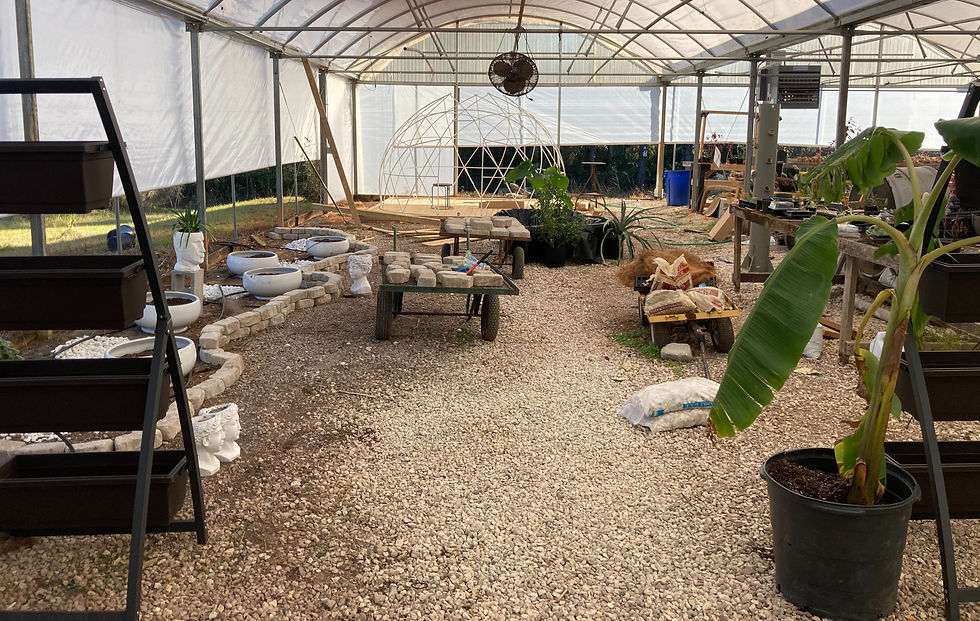

Those observations sparked an even deeper curiosity. I began noticing that some students, particularly those who struggled academically or faced cognitive challenges, seemed to flourish when working outdoors in the greenhouse or garden. Their attention improved, their stress levels decreased, and their confidence grew.
These experiences eventually led me to pursue formal training in both biophlic design and horticultural therapy, a discipline focused on how structured interaction with plants and gardens can improve mental, emotional, and physical health. What began as a classroom observation gradually evolved into a broader exploration of how nature and intentionally designed landscapes can support human wellness.
Around the same time, another idea began shaping my thinking about gardens and landscapes. I encountered the work of Doug Tallamy, whose book Nature's Best Hope proposes a transformative concept: conservation can begin in our own backyards. Tallamy argues that if homeowners replace portions of traditional lawns with native plants, individual landscapes could collectively form a vast ecological network he calls a “Homegrown National Park.” His earlier book, Bringing Nature Home further illustrates how native plants support insects, birds, and pollinators that cannot survive in landscapes dominated by ornamental species.
For someone teaching agriculture in one of the fastest-growing regions of the Southeast, this idea resonates deeply. Baldwin County, Alabama has experienced rapid population growth over the past decade as new neighborhoods expand across former farmland, wetlands, and longleaf pine ecosystems. Each new yard represents a choice. It can become another patch of resource-intensive turf, or it can become a small ecosystem supporting pollinators, birds, native biodiversity, and human health.
That realization has increasingly shaped the direction of my teaching.
As I walked through the woodlands and curated landscapes of Callaway Gardens, I saw more than plant collections. I saw models for how landscapes can function both ecologically and aesthetically. Native understory plants, layered woodland plantings, and thoughtfully designed garden spaces demonstrate that beauty, sustainability, and habitat restoration can coexist.
The visit also sparked inspiration for the upcoming 2026–2027 school year. My students will focus on the propagation of native plants and sustainable landscape design for suburban homes, learning how to grow and design gardens suited to the realities of modern neighborhoods. The goal is simple: equip the next generation of homeowners with the knowledge to create landscapes that conserve water, support wildlife, and reconnect people with the natural systems around them.
If even a few of those students eventually plant native trees, restore pollinator habitat, or rethink the traditional lawn, the impact will ripple far beyond the classroom.
Walking through Callaway Gardens reminded me that gardens are never just about plants. They are places where science, wellness, education, conservation, and culture intersect, quietly shaping how we understand and care for the natural world.

Comments