


Bolivia: From Copacabana to La Paz — Cathedrals, Floating Islands, Ancient Empires, Peppers at 12,000 Feet and a surprise ending to my journey

Updated: Jul 1, 2025

After an incredible stretch through Peru, I crossed into Bolivia, where my journey continued along the legendary shores of Lake Titicaca. My first stop was the quiet, colorful town of Copacabana, a sacred pilgrimage site nestled against the turquoise lake.


Morning Blessings at the Basilica
The next morning, I woke to a postcard-perfect view: small wooden fishing boats bobbing gently in the morning light, their bright blue, red, and yellow hulls popping against the calm silver-blue waters of Lake Titicaca. The snow-capped peaks in the distance framed the scene like a painting.
Before leaving, I visited the magnificent Basilica of Our Lady of Copacabana (Basílica de Nuestra Señora de Copacabana), a gleaming white 16th-century church built in Moorish style. This basilica holds the famed Black Virgin of Copacabana, Bolivia’s patron saint, carved by Francisco Tito Yupanqui — a direct descendant of Inca nobility who became one of Bolivia’s most revered sculptors.
Inside, I slipped into a pew for part of morning mass. Before leaving, had amulets blessed purchased for special friends and family—tiny symbols of protection for this journey and the roads ahead.
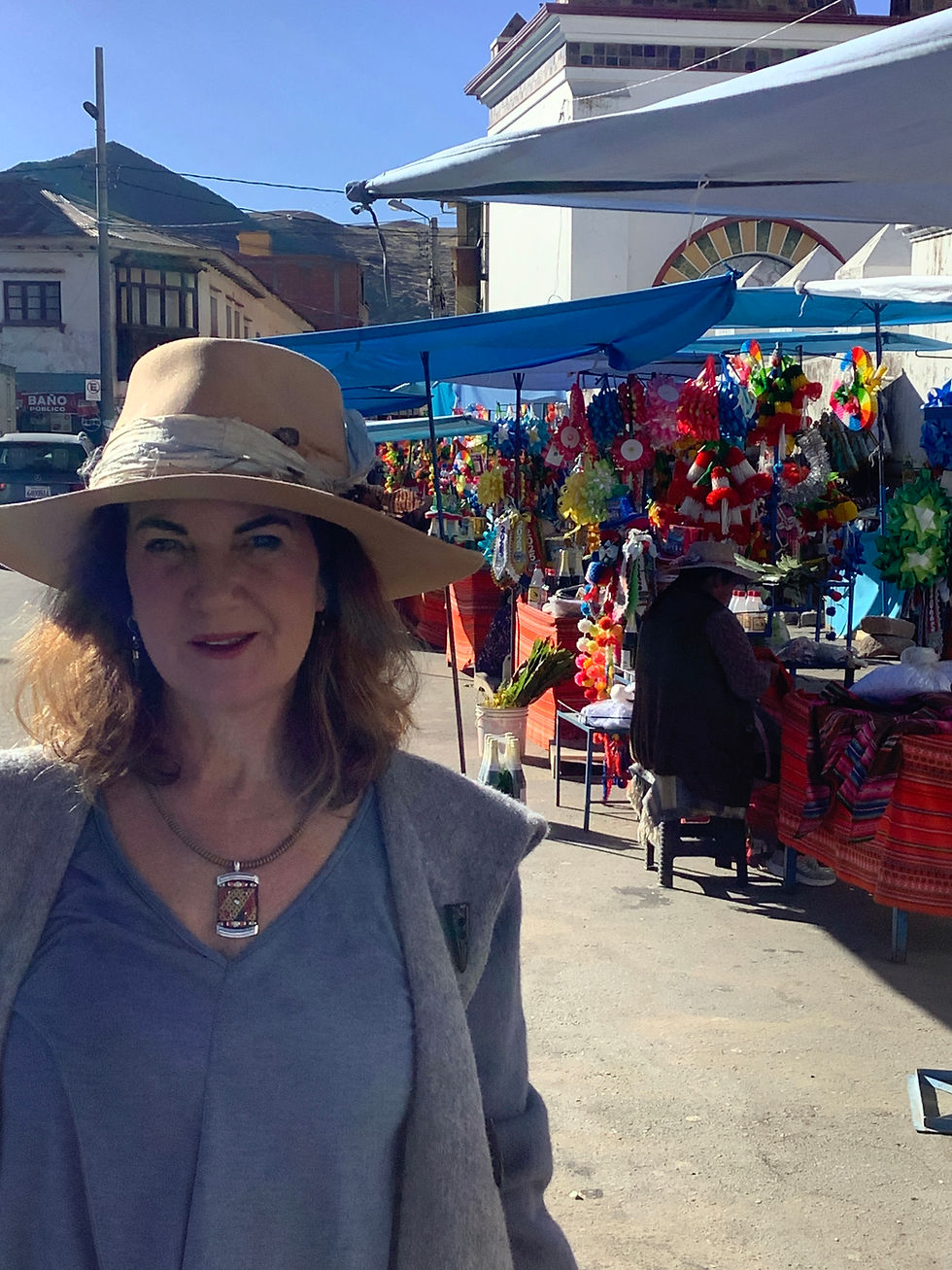
After mass, the Blessing of the Cars began — one of Copacabana’s most famous traditions. Local drivers lined up their vehicles in front of the basilica, decorated with flowers, ribbons, paper garlands, and miniature bottles of beer, vodka, wine or champagne. Vendors sold colorful kits of decorations for the ceremony. After blessing the people, the priest emerged, sprinkling holy water over the hoods and engines - prayers for safe travels across Bolivia’s wild mountain roads (and crazy drivers).


Driving the Shores of Lake Titicaca
I then left Copacabana, driving (well I had a driver) the winding roads that hug the Bolivian side of Lake Titicaca. The landscape here feels older, even more untouched than across the border in Peru. The terraces carved into the hillsides speak to ancient agricultural wisdom, many still in use today for rotating crops like potatoes, oca, fava beans, and, of course, quinoa — the sacred grain of the Andes.
I noticed that in Bolivia, far more women in traditional dress fill the markets, streets, and fields than I saw in Peru — their vibrant layered polleras (skirts), wide-brimmed hats, and intricately embroidered shawls create bursts of color against the deep green mountains.
As my guide explained the layers and details of their costumes, I couldn’t help but ask — a little embarrassed — whether the women were truly that large or if it was simply an illusion created by all the heavy skirts. She laughed gently and explained that, in fact, wide hips and a full figure are seen as a sign of beauty and prosperity here. The skirts are layered intentionally to emphasize this — a point of feminine pride on the Altiplano.I smiled and thought to myself: I wish that were true in my culture — I would fit right in!
Bolivia has even reinvigorated traditional dress through schools and cultural programs, actively encouraging younger generations to embrace their heritage. Everywhere I looked, these vibrant layers turned everyday life into a living celebration of identity and history.


The Bay of Puma and Ancient Aquatic Life
As we drove around the Bay of Puma (Bahía del Puma) — the mythical shape of Lake Titicaca itself — I marveled at the water’s incredible productivity. Trout farms dotted the bays, while locals fished from tiny wooden boats. The lake sustains an entire ecosystem of aquatic life:
Titicaca water frog (Telmatobius culeus) — the legendary giant frog, capable of absorbing oxygen directly through its skin
Native fish like karachi and mauri
Introduced rainbow trout and silverside which have proven to be very invasive and a threat to native aquatic fish
The surrounding reeds (totora) remain crucial for both animals and humans — harvested for animal fodder, woven into boats, used as roofing, ropes, mats, and even snacks. The importance of this ecosystem dates back thousands of years.
Floating Islands and Acora’s Market
We passed the town of Acora, where every Sunday, traders from the floating communities venture ashore to barter at the market. Many of these people still live on floating reed islands—much like the Uros of Peru—but here, they have unique adaptations. They reminded me of the chinampas I once visited in Mexico—floating gardens built by the Aztecs near Xochimilco. While the chinampas were agricultural platforms, these Lake Titicaca islands are fully functioning floating villages, a remarkable testament to human resilience in high-altitude wetlands.

Human Evolution and Collapse at Lake Titicaca
Diving expeditions in recent years have uncovered ancient underwater ruins and artifacts in Lake Titicaca, offering new clues to early human evolution here. Long before the Inca, powerful cultures like Tiwanaku rose along these shores.
Around 1100 AD, severe drought is believed to have led to societal collapse, forcing elites to migrate toward Cusco — ultimately setting the stage for the rise of the Inca Empire. Lake Titicaca remains central to Inca origin myths, both spiritually and historically.
Break at Quinoai Tamper: Ancient Slave Labor
We stopped at Quinoai Tamper, a high lookout and cafe where the lake stretched endlessly before us. Here, I learned about the tragic history of African slaves brought up from the lowlands to work Bolivia’s terraces and mines. Many died from altitude sickness; some escaped, settling in remote regions where descendants still live today—especially near Yungas and Coroico.
The Three Wars and Bolivia’s Borders
As we drove, my guide explained how Bolivia's modern borders were shaped by three devastating conflicts:
The War of the Pacific (1879-1884) — Bolivia lost its coastline to Chile
The Chaco War (1932-1935) — conflict with Paraguay over oil-rich territory
The Acre War (1899-1903) — Bolivia lost Amazonian land to Brazil
These conflicts left Bolivia landlocked, contributing to its present-day economic challenges.
Reed Boats, Egypt, and the Kon-Tiki Theory
We made a stop at Wiñay Marka (Eternal City), where I boarded a traditional reed boat—still handwoven using totora reeds exactly as their ancestors did. These boats sparked global curiosity after Norwegian explorer Thor Heyerdahl tested his Kon-Tiki and Ra expeditions, attempting to prove early transoceanic trade between the Americas, Africa, and Polynesia.
Heyerdahl’s theory was fueled by the reed boat similarities between Lake Titicaca and ancient Egyptian papyrus boats, and by shared agricultural crops like bottle gourds, sweet potatoes, and chili peppers found on both sides of the ocean — possible indicators of ancient contact.
More recently, German explorer Dominique Görlitz’s Abora expeditions revived Heyerdahl’s research, building new reed vessels to test the limits of ancient sailing technologies. Lake Titicaca remains a living laboratory for studying humanity’s deepest connections.


Moon Island and Inca Sacred Sites
Beyond the legendary Sun Island, we passed near the mystical Moon Island (Isla de la Luna), where Inca priestesses once lived in seclusion, guarding sacred knowledge and performing rituals for the Empire. This island, too, feels frozen in time, its stone ruins peeking from the hills like silent witnesses to an ancient world.
Crossing the Lake: San Pedro to San Pablo Ferry Adventure
One of the most surreal moments was when we crossed a narrow strait of Lake Titicaca via a ferry boat from San Pedro to San Pablo. The ferries here are little more than floating wooden platforms, where you quite literally drive your vehicle onto planks. I was even allowed to "captain" our own ferry boat, slowly navigating the waters while amused locals waved. A fun, spontaneous adventure!


Freddy Mamani’s Futuristic Architecture in El Alto
As we approached La Paz, the scenery shifted dramatically. Towering over the city, the neighboring highland city of El Alto burst with a new, vibrant architectural movement called Neo-Andean Futurism, led by architect Freddy Mamani. His buildings, called cholets, are multi-colored, geometric mansions blending Andean symbols, bold colors, and futuristic flair — a new expression of Aymara pride.

Arriving in La Paz by Sky Cab
Finally, I reached La Paz — dramatically nestled in a deep canyon beneath towering peaks. The city’s sprawling neighborhoods cling to the cliffs, and the fastest way down is by Mi Teleférico, the world’s longest urban cable car system. Gliding silently above the city in my glass gondola, I marveled at the dizzying views of Bolivia’s capital.


Hunting Bolivian Peppers at the Indian Market
No trip would be complete without continuing my pepper research.
Peruvian cuisine is based on a history of peppers: ajís hot and mild; vibrant and subtle; of various colors; bulbous or the size of a fingernail. Images of these peppers decorate the textiles and ceramics of coastal pre-Colombian cultures such as the Moche, Nazca and Chimú. And in the highlands, ají played a role in Inca mythology as well as in Inca food.
In modern Peru, about 50 varieties of chili pepper are used in the national cuisine. Some are regional and rarely found outside a specific city or department. Others have become key ingredients that help define Peruvian gastronomy both at home and increasingly abroad.
At the Indian Market in La Paz, I found several types of native Bolivian Capsicum varieties, including:

Capsicum pubescens (rocoto)

The rocoto is normally red when mature, but can also be orange, yellow or green. As well as being the hottest pepper covered here, it is also the only one with black seeds.


Capsicum baccatum (ají amarillo and ají limón)

Ají limo comes in a variety of shapes, sizes and colors, from long and yellow to round and red. But if there’s one thing that unites the ají limo family, it’s ceviche. Raw and finely chopped, this chili pepper adds flavor, color and heat to ceviches and tiraditos all along the coast of Peru. Considerate waiters ask customers if they would like ají in their ceviche, as the heat from ají limo can easily have you reaching for the nearest bottle of beer or Inca Kola.


Ají panca
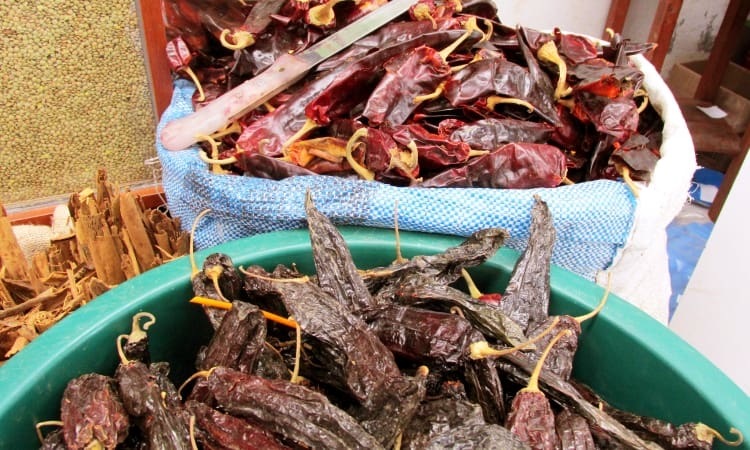
Ají panca grows in the central coastal region of Peru. Freshly picked, it has a distinctive dark red color, but turns to a shade of dark chocolate after it has been dried in the sun. Traditional Peruvian market stalls sell ají panca fresh, in its dried form, or ground (panca molido). Ají panca pastes and marinades are also common.

And - I finally found one of Bolivia’s most intriguing native chili peppers: the tiny green ají, no larger than a BB pellet, but packing a surprising punch of heat. This was my most exciting find!
Botanically, this pepper belongs to Bolivia’s rich wild Capsicum diversity:
Capsicum cardenasii / Capsicum eximium / Capsicum caballeroi complex
Sometimes called ulupica, arivivi, or ají bolivian wild green depending on region
Native to the high Andean valleys of Bolivia, growing at elevations between 2,000–3,500 meters
Its tiny fruits turn from green to orange-red when fully mature, but are often harvested while still bright green
Flavor: extremely hot for its size, with hints of citrus and a slightly smoky, resinous undertone
This diminutive pepper is thought to represent some of the earliest stages of chili domestication in South America — a direct living link to humanity’s long relationship with Capsicum.
While larger varieties like rocoto (Capsicum pubescens) dominate Bolivian cooking, these tiny wild chilies are cherished for adding sharp, clean heat to sauces, soups, and even infused alcohols. In some regions, they’re ground into powerful green pastes or added whole into simmering broths, slowly releasing their spice.The sheer biodiversity here reaffirms Bolivia’s role as one of chili’s original birthplaces — the perfect spicy bookend to my trip. Need to get this one home whole.

A few more market pics


The Witches’ Market: Trinkets, Traditions, and Economics
I finished the day at La Paz’s famous Witches’ Market (Mercado de las Brujas), where I loaded up on charms, trinkets, and talismans. From tiny llama fetuses for blessings to herbs, love potions, and fertility dolls, every stall overflowed with Bolivia’s blend of ancient Andean spiritual traditions and Catholic superstition. I had a local "witch" bless my peppers so they get home safe and purchased an Inca Cross amulet representing agriculture.
I found the prices shockingly low — Bolivia’s inflation remains tightly controlled compared to its neighbors, but its economic struggles, currency controls, and political challenges keep the exchange rate very favorable for visitors.


La Paz: Culinary Traditions, Manq’a, and Bolivia’s Spicy Botanical Heritage
My final day in La Paz brought me deeper into Bolivia’s evolving food culture, where ancient agricultural roots now meet a bold, modern culinary revival.
Manq’a: A Culinary Movement with a Mission
One of my most inspiring experiences was visiting the restaurant Manq’a — part of a powerful educational and social project that has gained international acclaim. Founded to train young chefs from Bolivia’s countryside, many from underserved backgrounds, Manq’a offers culinary education rooted deeply in Bolivia’s indigenous food traditions.
In 2020, Manq’a was ranked among the 50 Best Restaurants in Latin America, and in 2021 it earned a coveted spot among the Top 50 Best SMEs (Small and Medium Enterprises) in the world — a recognition not just of its food, but its social mission. Here, students master techniques that honor Bolivia’s biodiversity, while gaining the skills to enter professional kitchens and support their communities.
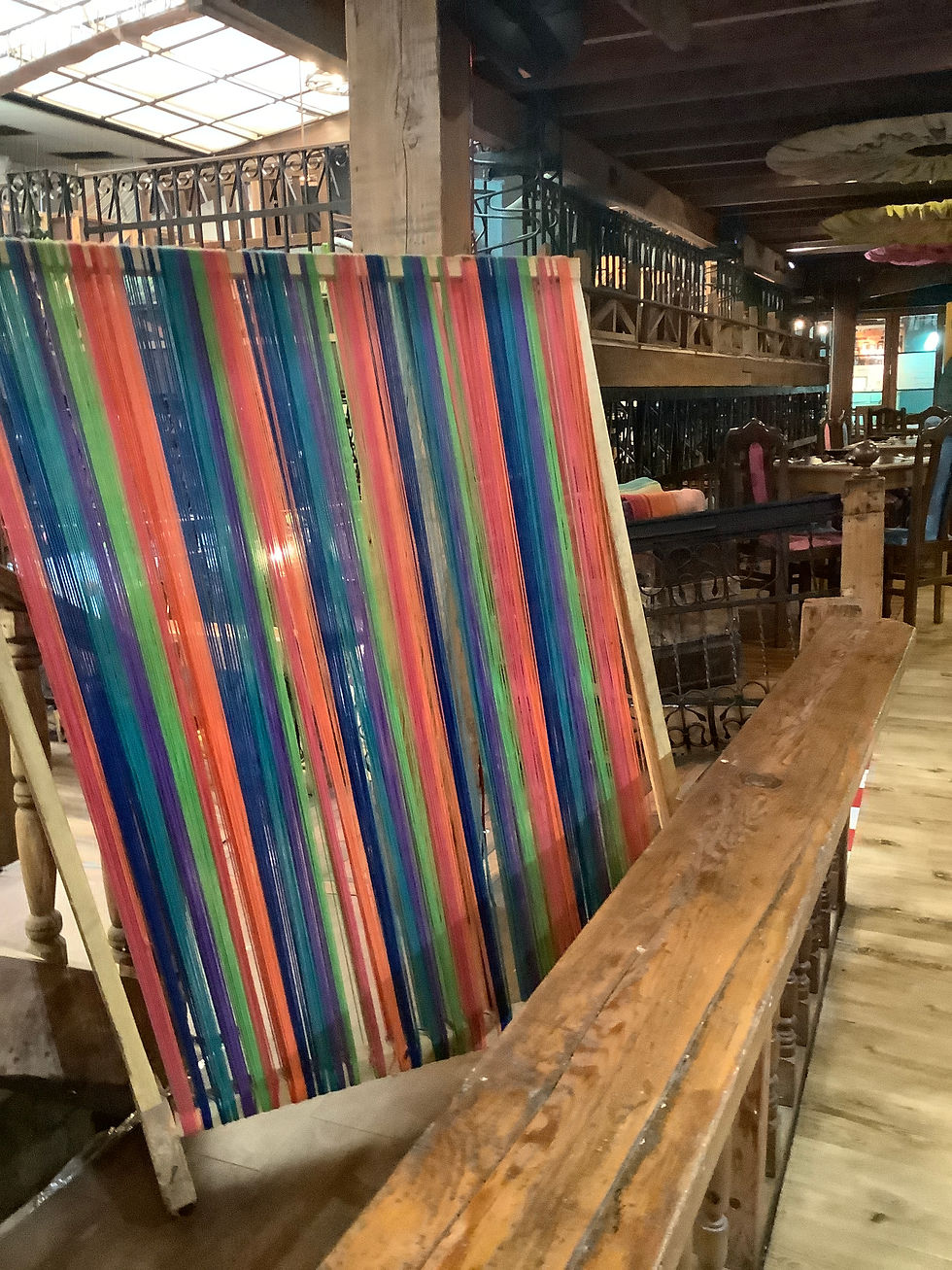
The restaurant itself was stunning — a blend of traditional Andean design with sleek modern lines, handwoven textiles adorning the walls, soft lighting, and rustic woodwork. The open kitchen buzzed with activity as young chefs proudly prepared each dish, showcasing ingredients grown in Bolivia’s highlands, jungles, and valleys.




A Sensory Introduction to Bolivian Cuisine

Before cooking, I was presented with a small cloth bag filled with Bolivia’s most essential ingredients. Each bag contained items representing the heart of Bolivia’s culinary heritage:
Quinoa — the ancient “mother grain” of the Andes
Amaranth — another ancient grain rich in protein
Chuño — freeze-dried potatoes preserved since Inca times
Fava beans
Aromatic herbs — including muña and huacatay
Coca leaves
Dried rocoto peppers
Ají amarillo and ají panca
Purple corn kernels for chicha morada
Wild peanuts from Bolivia’s Amazonian regions
These small pouches were like tactile ethnobotanical dictionaries — a hands-on glimpse into thousands of years of agricultural mastery.


Cooking Class: Quinoa, Trout, and Traditional Drinks
During my cooking class at Manq’a, I learned to prepare:
A bright quinoa salad with fava beans, fresh tomatoes, rocoto slivers, and a vibrant dressing of lime, huacatay (Andean black mint), and local herbs.
Perfectly pan-seared Lake Titicaca trout, served with a rich sauce of ají amarillo, garlic, and native Bolivian herbs.


Ialso met with a kumbachu specialist ( a student) — an expert in Bolivia’s fermented beverages — who taught us how to prepare traditional chicha and other ancestral drinks, including maize-based infusions flavored with spices and fresh herbs, many of which are still offered at Manq’a’s bar.


A Quick Trip to the Moon (Valley)
Before leaving La Paz, I visited the famous Valle de la Luna (Moon Valley) — a haunting, otherworldly landscape of eroded clay spires just outside the city. In 1969, Neil Armstrong himself visited Moon Valley, remarking on its eerie similarity to the lunar surface he had recently explored. The jagged formations feel like walking through a frozen ocean of sand dunes—a surreal ending to my time in La Paz.

A Sudden Change in Plans: Ecuador’s Yellow Fever Policy
At this point, my trip was meant to continue on to Ecuador. However, just days before arrival, Ecuador implemented a sudden yellow fever vaccination requirement, demanding vaccination 10 days prior to entry — a timeline I could no longer meet.
Although I couldn’t complete my Ecuador segment in person, my pepper research continues. Ecuador’s chili peppers also represent an important branch of Capsicum’s evolution:
Capsicum frutescens (chilcostle, malagueta types)
Capsicum chinense (ají amazónico)
Wild Capsicum eximium relatives in Andean foothills
The iconic ají rocoto-like peppers, though less common than in Peru and Bolivia
In Ecuadorian cuisine, peppers play vital roles in dishes such as ají de tomate de árbol, locro de papas, and spicy seafood ceviches, often combined with tropical fruits like naranjilla and maracuyá — a distinct contrast to Peru’s elegant ceviches or Bolivia’s earthy, hearty stews and grain based dishes.
Comparing the regions:
Country | Key Chili Species | Typical Uses |
Peru | Ají amarillo, ají limo, ají panca, rocoto | Ceviche, stews, sauces |
Bolivia | Rocoto, ají puca uchu, wild cardenasii, charapita relatives | Soups, chuño dishes, grilled meats |
Ecuador | Ají amazónico, frutescens, chinense relatives | Fruit salsas, seafood, locro, hot sauces |
Each country’s peppers reflect both geography and culture — Peru’s coast and valleys, Bolivia’s high plains, and Ecuador’s Amazonian slopes — all part of chili’s remarkable ethnobotanical story.
And I will be bringing some of this story home!


Bài viết rất dễ theo dõi, cảm ơn bạn đã chia sẻ. Mình cũng hay theo dõi số liệu hằng ngày nên hiểu cảm giác cần kiểm tra nhanh. Vì vậy mình tự gom lại thành một trang tổng hợp để tiện tra cứu, khỏi phải tìm nhiều nơi. Ai quan tâm dữ liệu cập nhật theo ngày thì ghé qua. Bạn nào cần tra nhanh có thể xem thêm tại https://tealfeed.com/soicauxsmbpro
Mình chơi xổ số kiểu cho vui là chính, coi như giải trí nên cũng không đặt nặng chuyện trúng đậm. Trước đây nghe người ta bàn về “cầu kèo” các kiểu mình thấy hơi mơ hồ, nửa tin nửa ngờ. Nhưng theo dõi một thời gian thì cũng có lúc thấy vài chi tiết lặp lại, nên mình thử ghi chú lại cho đỡ quên. Mình hay đọc vài nhận định rồi tự tóm tắt, sau đó mở https://soicauxsmb.io/so-ket-qua.html để đối chiếu xem có phải mình đang tự tưởng tượng ra quy luật không. Có hôm trúng được chút thì vui thật, nhưng cũng không ít lần lệch hoàn toàn nên mình luôn nhắc bản thân đừng phụ thuộc.…
Mình thỉnh thoảng cũng lướt mấy bài phân tích xổ số miền Bắc cho vui thôi, kiểu đọc để xem người ta suy luận thế nào chứ không đặt niềm tin 100%. Hồi trước toàn nghe bạn bè mách nước, bảo “cầu này ngon” là mình ghi đại, nhưng trật vài bận liên tiếp nên bắt đầu để ý hơn tới thống kê và cách giải thích. Có lần vô tình đọc một bài trên soicauxsmb.pro, mình mới thấy nhiều “cầu” thực ra chỉ là nhìn dữ liệu theo cảm giác, nên mình tự hạ kỳ vọng xuống. Từ đó mình coi việc xem số như giải trí, có chọn thì chọn ít, thử vận may là chính. Mình thích…
Detached garages offer excellent flexibility for storage, workshops, and protecting vehicles throughout the year. Proper construction ensures long-lasting durability and convenience. Investing in detached garage construction services in Waco, TX adds both functionality and value to residential properties.